
Why a $240,000 Rental Excavator Usually Gets Bonus, Not Section 179
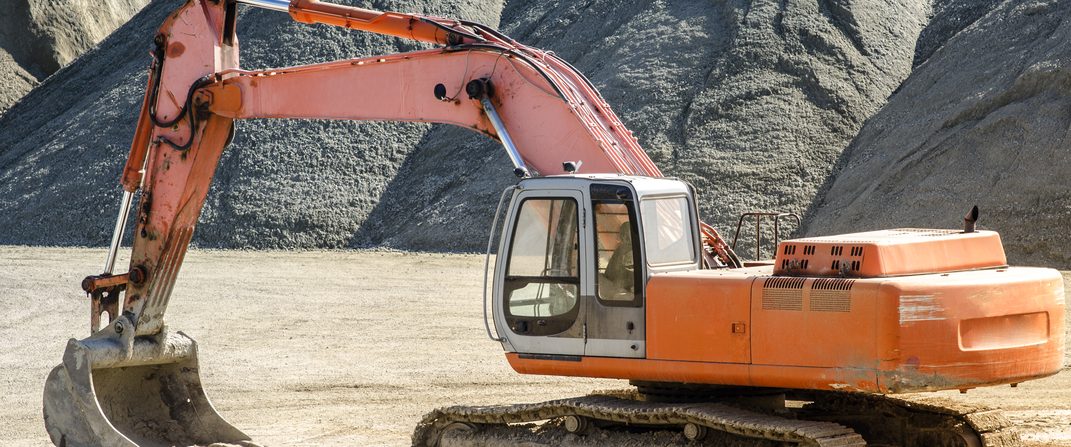
Section 179 has a test for owners who buy equipment and rent it out, and an LLC renting machines to contractors often fails it. For 2026, 100% bonus depreciation gives the same first-year deduction without that test.
"I'm buying a $240,000 excavator through my LLC to rent to contractors by the day. My plan is to take section 179 on it this year. Will that work?"
The question this post answersProbably not. The noncorporate lessor rule in section 179(d)(5) is written for exactly that owner.
If the machine sits in a single-member LLC or one taxed as a partnership, section 179 is probably off the table. Bonus depreciation reaches the same first-year number by a different route.
1 Section 179 has its own rule for equipment you rent out
For tax years beginning in 2026, section 179(b)(1) lets a business expense up to $2,560,000 of equipment in its first year, and section 179(b)(2) shrinks that limit by every dollar placed in service above $4,090,000 (Rev. Proc. 2025-32).
None of that helps an owner who fails this sentence of the statute:
"This section shall not apply to any section 179 property which is purchased by a person who is not a corporation and with respect to which such person is the lessor unless
(A) the property subject to the lease has been manufactured or produced by the lessor, or
(B) the term of the lease (taking into account options to renew) is less than 50 percent of the class life of the property (as defined in section 168(i)(1)), and for the period consisting of the first 12 months after the date on which the property is transferred to the lessee the sum of the deductions with respect to such property which are allowable to the lessor solely by reason of section 162 (other than rents and reimbursed amounts with respect to such property) exceeds 15 percent of the rental income produced by such property."
2 Your LLC is probably a noncorporate lessor
Treas. Reg. §1.179-1(i)(2) glosses the term in a parenthetical, "(i.e., a person who is not a corporation and is a lessor)." That covers you as an individual, a single-member LLC (the IRS disregards it, so you are the lessor) and an LLC taxed as a partnership. An LLC taxed as a C corporation is outside the rule.
An S corporation is the gray area. It is a corporation under state law, and the Form 4562 instructions apply the rule to "taxpayers other than a corporation," but an S corporation computes taxable income the way an individual does. We have not found IRS guidance that settles it.
3 There are two ways back in, and the second has two parts
The first exception is a machine you built yourself, which rules out anyone who bought from a dealer. The second needs a short lease and real operating costs.
4 For construction customers, the line is three years
Class life comes from Rev. Proc. 87-56, reprinted in Appendix B of Publication 946. Asset class 15.0, Construction, covers "assets used in construction by general building, special trade, heavy, and marine construction contractors" and gives them a 6-year class life and a 5-year recovery period. Half of 6 years is 3 years, so the lease, counting any renewal options, has to run less than 3 years.
For a lessor, the class follows the customer. The depreciation regulations place leased property in the class that applies "as if the property were owned by the lessee." An excavator rented to contractors sits in class 15.0, so the 6-year class life and the 3-year line hold when your customers are in construction. A lift rented mostly to warehouses or retailers can land in a different class, with a different line.
A multi-year dealer or fleet program agreement may itself be the lease. For class 15.0 equipment, a 36-month term is exactly half of 6 years, not less than half, so it fails.
5 The 15% test counts only a narrow set of costs
The second half counts only deductions allowed "solely by reason of section 162" during the first 12 months after the machine first goes out to a customer, leaving out rents and reimbursed amounts. Those have to add up to more than 15% of the rent the machine earns over the same 12 months.
That leaves out depreciation and loan interest, the two biggest costs of owning a machine, plus property tax. Depreciation is a section 167 and 168 deduction, loan interest falls under section 163, and property tax under section 164. What is left is insurance, repairs, unbilled hauling, storage and similar costs.
Hauling you bill to the customer is a reimbursed amount, so it drops out too.
6 Bonus depreciation has no lessor test
The 2025 tax law made bonus depreciation 100% again for machines acquired after January 19, 2025, so an excavator bought and placed in service in 2026 can be deducted in full in year one by an individual, a single-member LLC or a partnership. A machine counts as acquired when you sign a written binding contract for it, so one ordered under a contract signed on or before January 19, 2025 and placed in service in 2026 gets the old 20% rate instead.
Used machines qualify under section 168(k)(2)(E)(i), as redesignated by P.L. 119-21, if you did not use the machine before acquiring it and the purchase meets section 179(d)(2)(A) to (C) and (d)(3), which bar related sellers among others. Prior use means a depreciable interest in the machine during the five calendar years before the year it is placed in service, or earlier in that year. A lessee under a true lease who buys the machine at fair market value qualifies (Treas. Reg. §1.168(k)-2(b)(3)(vii)(F), Example 6), though not if the seller is related under section 179(d)(2)(A) or (B) (Example 7). If the "lease" was really a sale, general tax-ownership law makes you the owner from the start, so the buyout is not a new acquisition and bonus is tested when the deal began.
Bonus and section 179 still differ in three places:
- Income limit. Section 179 cannot exceed your taxable income from the active conduct of a trade or business, and the excess carries forward. Bonus can create a loss.
- Business use. Section 179 is recaptured if business use falls to 50% or less in any year of the recovery period (Treas. Reg. §1.179-1(e)).
- State returns. Some states do not follow federal bonus. California, for one, has not conformed to section 168(k), and the 2025 FTB Form 3885A instructions cap its own section 179 deduction at $25,000, reduced once purchases pass $200,000.
7 A $240,000 excavator, worked through
Take an owner who buys a $240,000 excavator in March 2026 through a single-member LLC and rents it to contractors by the day and week. The longest rental is 14 days and the average is 5. Over its first 12 months the machine earns $90,000.
The term test passes, 14 days against a 3-year line. The 15% test fails by $1,200 (Figure 2). So there is no section 179, and the owner claims 100% bonus. The 2026 return covers March to December; for illustration, its figures are 10/12 of the first-12-month amounts:
Rental income: $75,000
Insurance, repairs, unbilled hauling and storage: ($10,250)
Loan interest: ($11,000)
Bonus depreciation at 100%: ($240,000)
2026 loss: ($186,250)
Without bonus, 5-year MACRS under the half-year convention allows 20% in year one, or $48,000, and the LLC would show $5,750 of income. At a flat 32% for illustration, the $186,250 loss is worth about $59,600 of federal tax. That assumes the loss is nonpassive, which usually means rentals averaging 7 days or less (or 30 days or less with significant personal services) plus material participation, and that it fits under the section 461(l) limit. Equipment on month-plus leases is usually a rental activity, and that loss is passive regardless of hours.
8 Rental length decides whether the loss is passive
Treas. Reg. §1.469-1T(e)(3)(ii) treats an equipment rental as something other than a rental activity in two common cases: the average period of customer use is seven days or less, or it is 30 days or less and you provide significant personal services to make the machine available.
Our excavator averages 5 days, so it is treated as a business. The loss offsets wages if the owner materially participates, usually by working more than 500 hours, or more than 100 hours and no less than anyone else, employees included.
Lease the same machine to one contractor for 36 months and both answers flip. The term test fails, so section 179 is out, and with average use far past 30 days the loss is passive. Bonus still applies, but the loss is suspended until the owner has passive income or sells the machine to an unrelated buyer in a fully taxable sale.
The excess business loss limit lets a net business loss offset no more than $256,000 of other income for a single filer in 2026 ($512,000 joint), per Rev. Proc. 2025-32. Our owner's $186,250 fits if there are no other business losses that year. Before either limit, the at-risk rules, which apply to individuals and closely held C corporations, can cap the loss: section 465 treats each leased machine as its own activity (a partnership or S corporation groups each year's machines), and nonrecourse debt is not at risk.
9 Selling the machine brings the deduction back as ordinary income
An excavator is section 1245 property. On a sale, gain is ordinary income to the extent of the depreciation claimed. After full bonus the basis is zero. Sell the machine in 2029 for $150,000 and all $150,000 is ordinary income, about $48,000 at 32%.
Over those years the owner deducted $240,000 and gave back $150,000, a net $90,000. Trading the machine in on a new one counts as a sale too. Since 2018, like-kind exchanges cover only real property, so the trade-in allowance is your sale price.
10 What to do before the next machine
- Read the lease or program contract. For class 15.0 equipment, any term of 3 years or more, counting renewals, fails.
- Track the 15% numbers from the first rental. Rent and section 162 costs only, for 12 months, with reimbursed hauling kept separate.
- Watch average rental length. Seven days or less keeps the activity out of the rental rules.
- Keep an hours log. If an employee or dealer logs more hours than you, the 100-hour test fails and you generally need more than 500 hours instead.
Settle the ownership and lease terms before the machine goes into service. Our tax planning team runs both section 179 tests and the passive loss question, and models the sale, before you sign.
General information for owner-operators, not tax advice for your situation. Thresholds change and state treatment varies; confirm current requirements for your own facts before acting.
Frequently asked
Questions, answered
Can an S corporation take section 179 on equipment it rents out?
Unsettled. The lessor rule reaches anyone other than a corporation, and an S corporation is one under state law, yet it figures its income the way an individual would. With no IRS ruling on point, we would not rely on it for a large purchase.
Does a skid steer rented by the day pass the lease term test?
Yes, when its customers are construction contractors. That puts it in asset class 15.0 with a 6-year class life, so any single rental shorter than 3 years passes.
Does depreciation or loan interest count toward the 15% test?
No. Only ordinary business costs deductible under section 162 count, such as insurance and repairs. Depreciation, interest and property tax are deducted under other code sections, and any cost a customer pays you back for is excluded as well.
Is bonus depreciation available on a used excavator?
Generally yes, if it was acquired after January 19, 2025, the seller is not related to you, and you had no depreciable interest in it over the five calendar years preceding its placed-in-service year. A customer under a true lease who buys at fair market value can qualify. A lease that was in substance an installment sale cannot.
What if I rent the machine to my own construction company?
You or your LLC are still the lessor, so both section 179 tests apply to that lease. For the passive rules, Treas. Reg. 1.469-2(f)(6) treats net rent from property used in a business you materially participate in as nonpassive, while a rental loss stays passive. Grouping the rental with the company may be possible when ownership is identical (Treas. Reg. 1.469-4(d)(1)), depending on the facts.