
Why a $140,000 Rental RV Offsets $125,000 of Salary, or Nothing
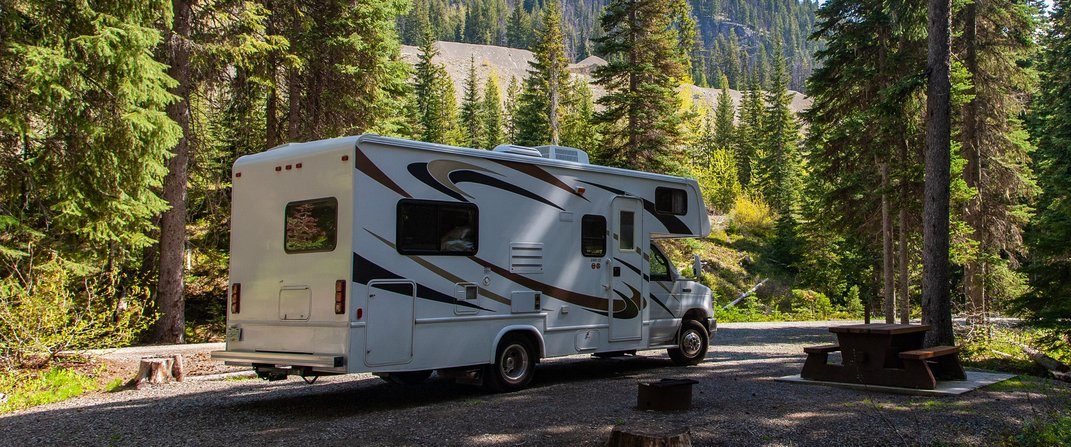
A rental motorhome usually escapes the $20,300 cap that limits a Turo car, so bonus depreciation can take its whole price. How you use the RV decides whether that deduction ever reaches your salary.
"We just bought a $140,000 Class C to rent on Outdoorsy. We'll take it out a couple of weekends ourselves. Can we write off the whole thing against my salary this year?"
The question this post answersFor most motorhomes the answer on the deduction itself is yes. An RV is too heavy for the luxury auto cap that holds a Turo sports car to $20,300 in its first year under Rev. Proc. 2026-15, and 100% bonus depreciation is back. Whether that deduction lowers the tax on your salary is a different question, and three facts answer it: how many days you use the RV yourself, how long the average rental runs, and who does the work.
1 Most RVs are too heavy for the luxury auto cap
The cap in section 280F reaches only a "passenger automobile," which the code defines as a 4-wheeled vehicle made mainly for public roads and rated at 6,000 pounds or less. For a truck or van, the rating used is gross vehicle weight, meaning loaded. For any other vehicle it is the unloaded rating.
Motorhomes clear that line by a wide margin. As of October 2026, Winnebago's spec sheets rate its 21-foot Travato camper van, on a Ram ProMaster chassis, at 9,350 pounds gross, and its current Minnie Winnie 22M, a 24-foot Class C on a Ford E-450 chassis, at 14,500. A camper built on a minivan is the one to check.
2 A light travel trailer is the unsettled case
A travel trailer has no engine, and the definition never says a vehicle needs one. A tandem-axle trailer has four wheels and is built for the road. It is not a truck or van, so its unloaded weight would be the test, and plenty of trailers weigh under 6,000 pounds empty. We have found no ruling or IRS guidance that settles whether the cap reaches a towed trailer.
On a $30,000 trailer, the cap would trim year one to $20,300 and push $9,700 into later years. We would plan on the cap for a light trailer. Either way a trailer is likely listed property, because the code separately lists "property of a type generally used for purposes of entertainment, recreation, or amusement," so the business-use test and records rule below would apply to it too.
3 Every likely asset class gives five years, and bonus takes it all
The IRS asset tables in Rev. Proc. 87-56, reprinted in IRS Publication 946, have no class for owning or renting RVs. The candidates, including automobiles (00.22), light and heavy trucks (00.241, 00.242), trailers (00.27) and personal-service assets (57.0), are each 5-year property under the regular system. The slower alternative system runs 5 to 9 years.
Section 168(k)(1) sets bonus at 100%, and the effective-date rule in P.L. 119-21, section 70301(c), applies it to property acquired after January 19, 2025. An RV bought under a written binding contract signed before January 20, 2025 does not count as acquired after that date. A used RV qualifies if you never used it before buying it and did not buy it from your spouse, a parent or grandparent, a child or grandchild, or an entity you control.
4 An RV you stay in counts as a vacation home
Section 280A limits deductions on a "dwelling unit" that you use as a residence, and defines the term to include "a house, apartment, condominium, mobile home, boat, or similar property." In Haberkorn v. Commissioner, 75 T.C. 259 (1980), the Tax Court held that a rented mini-motorhome with a bed, a kitchen and a bathroom is similar property, and that being a licensed vehicle does not change that. The Ninth Circuit followed Haberkorn for an RV in Jackson v. Commissioner, a 2017 memorandum the court marked as not precedent.
Three rules follow, all counting days:
- One personal day starts a split. If you use the RV yourself on any day of the year, every rental expense, bonus depreciation included, is limited to the share that days rented at a fair price bear to total days used. The personal share is never deductible. Interest and taxes deductible anyway, if otherwise deductible, are not split.
- Too many personal days make it a residence. The line is more than 14 days, or 10% of the days rented at a fair rental if that is higher. Past it, rental deductions cannot exceed rental income, so there is no loss left to offset your salary. The rental share you could not deduct carries to next year.
- Family days are your days. A day counts if you, a co-owner or a family member uses the RV for any part of it, or if anyone uses it for less than fair rent.
5 Rental miles still have to beat personal miles
A motorhome is also listed property, because it is property "used as a means of transportation." For a vehicle, business use is measured in miles, not days, and bonus is available only if more than half the year's miles are qualified business use. If a later year's share is 50% or less, the extra depreciation you took comes back as income. Renting to a relative is not qualified business use, and neither is use the IRS treats as investment rather than a trade or business.
Section 274(d) also denies any deduction for listed property unless your records show the amount, the date and the business purpose of each use.
6 The average rental decides whether the loss is passive
The passive loss rules treat any rental activity as passive, however many hours you work. The regulations carve out two cases that matter here:
- An average rental of 7 days or less. The activity is not a "rental activity" at all. The loss is non-passive if you materially participate.
- An average rental of 30 days or less, with significant personal services. Whether services are significant depends on how often they are provided, the labor involved and their value next to the rent. Delivering the RV and setting it up at a campsite every time might qualify. No court has applied this to an RV yet, so keep a detailed log.
The average rental is total rental days divided by the number of rentals, for the year. A summer of two-week rentals can push it past 7. Without significant services, the loss is then passive whatever your hours.
The $25,000 allowance in section 469(i) covers only "rental real estate activities," and real estate professional status is limited the same way. An RV is personal property, so neither helps.
7 A co-host or a campground can outwork you
With a 7-day average rental, the loss still needs material participation. The test most single-RV owners rely on needs over 100 hours for the year and no individual with more hours than you, even someone who owns no part of the RV. A co-host who handles messages, handoffs and cleaning, or campground staff who run a parked trailer, can easily log more. Then only the 500-hour test is left.
A passive loss waits for passive income. A fully taxable sale of the whole RV to an unrelated buyer frees it: the loss first absorbs that year's other passive income, and the rest becomes non-passive. A non-passive loss is also subject to the excess business loss limit, $256,000 single and $512,000 joint for 2026 under Rev. Proc. 2025-32, which a single RV seldom approaches.
Four checks follow the weight question:
8 A $140,000 motorhome, three ways
Take a married couple in the 37% bracket who buy a Class C motorhome for $140,000 and list it in March 2026. It rents for 90 days across 18 rentals, a 5-day average rental, and brings in $27,000 after platform fees. Insurance, maintenance, cleaning and storage cost $12,000. They do the handoffs and cleaning themselves, log 160 hours, and nobody else logs more.
Path A, no personal use
Rental income: $27,000
Operating costs: -$12,000
Bonus depreciation: -$140,000
Loss that offsets salary: -$125,000
Federal tax saved at a 37% marginal rate: $46,250
Path A assumes zero personal days; even one would prorate every expense, bonus included. It assumes taxable income stays in the 37% bracket after the loss. Separately, it assumes the rental is a trade or business: a 5-day average keeps it out of the rental rules but does not make it one, and investment use is not qualified business use, which means straight-line and no bonus. A $125,000 loss on $27,000 of revenue can also draw a section 183 profit-motive question.
Path B, add 18 days of family camping
Eighteen personal days is more than 14, and 14 beats 9 (10% of 90 rented days), so the RV is a residence for 2026. Every cost is split 90 rental days out of 108 days used. The limit starts from gross rental income, and a 1980 proposed regulation, never finalized, nets the cost of getting renters (so we use income after platform fees), takes operating costs first and lets depreciation fill the room left.
Rental income after platform fees: $27,000
Operating costs, rental share: -$10,000
Depreciation, rental share of $140,000: $116,667
Depreciation allowed in 2026: -$17,000
Loss that offsets salary: $0
Depreciation carried to 2027: $99,667
Never deductible: $23,333 depreciation, $2,000 costs
The $99,667 faces the same income limit later. Unlike a suspended passive loss, a sale does not free it, and whether it still reduces basis is unsettled. Because section 280A governs this use, the passive loss rules switch off for it rather than stacking. Path B also assumes rental miles stay above 50%; mileage controls that test, and long family road trips could end bonus entirely. Section 280F measures business use in miles while section 280A prorates by days, and no authority reconciles the two. The $116,667 assumes rental miles are all of the business use.
Path C, a longer average rental
Same income and costs with no personal use, but 9 rentals of 10 days each. The average rental is over 7 and the couple provides no significant services, so this is a rental activity. The $125,000 loss is passive. It offsets none of their salary in 2026, though it can absorb any other passive income they have.
9 The sale gives part of it back
Because an RV is section 1245 property, gain on a sale is ordinary income to the extent of the depreciation claimed, taxed at your regular rate. In Path A, a 2029 sale for $85,000 against a basis of zero is $85,000 of ordinary income. Net, the couple deducted $55,000, what the motorhome lost in value, and at 37% both ways $31,450 of the 2026 saving is paid back in 2029. If rental miles fall to 50% or less in any year before the sale, the bonus above what straight-line would have allowed comes back as income that year.
10 What to do before the first rental
- Read the weight label by the driver's door before you buy. More than 6,000 pounds on the measure that applies takes the cap off the table.
- Count your own days. Zero keeps all of the bonus on the rental side. Past 14, or 10% of rented days if higher, there is no loss this year. Any part of a day counts, and so do family members.
- Keep two logs from the first rental. Miles, with odometer readings for every rental and every personal trip. Hours, for handoffs, cleaning, guest messages and maintenance runs.
- Have it ready to rent by December 31. Depreciation starts when the RV is ready and available for rental. A December purchase that is not listed until January belongs to 2027.
Run Path A and Path B before you plan the first family trip. Our tax planning team runs the personal-day count, the average rental and the eventual sale before you commit, and the excess business loss calculator shows how much of a loss you can use this year.
General information for owner-operators, not tax advice for your situation. Thresholds change and state treatment varies; confirm current requirements for your own facts before acting.
Frequently asked
Questions, answered
Does the luxury auto cap apply to a camper van?
Usually not. Vans are judged by their loaded weight rating, and camper vans on full-size van chassis are typically rated above 6,000 pounds. A minivan conversion could fall under the line.
How many days can I use my rental RV myself?
Up to 14 in the year, or more if 10% of your fair-rental days is a bigger number, before rental deductions are capped at rental income. But any personal day at all moves part of every expense, depreciation included, to the personal side, and that part is never deductible.
Is there a $25,000 passive loss allowance for an RV?
No. Section 469(i) gives that allowance only for rental real estate. An RV is personal property, so with an average rental over a week and no significant services, the whole loss is passive.
Can I take bonus depreciation on a used RV?
Yes. Bonus covers used property if you had not used that RV before you bought it and the seller was not your spouse, an ancestor, a descendant or a company you control. A purchase from a brother or sister does not block it.
My trailer sits at a campground that rents it for me. Does that change anything?
It changes who does the work. If campground staff handle reservations, turnovers and guest questions, they probably log more hours than you, and the loss turns passive unless you put in more than 500 hours yourself. Any day you stay in it yourself still counts as personal use.